
schiwagos's BLOG - Erzählungen aus dem rotarischem Universum
Samstag, 28. September 2013
Marriage Is As Protective As Chemotherapy in Cancer Care
What is the price of a happy marriage, a secure family, and a network of well-connected friends within our communities today? Aizer et al1 present noteworthy findingsin the article that accompanies this editorial, which suggest that being single, separated, divorced, or widowed significantlyincreases the risk of oncologic presentation with already metastatic cancer, reduced adherence to state-of-the-art treatment, and greater likelihood of earlier death from this cancer. On the basis of the National Cancer Institute’s SEER Medicare data from 734,889 contemporary Americans (2004 to 2008), these incontrovertible data come from the 10 leading cancers, apply to both men and women, and create profound implications for our models of cancer care.1 Strikingly, the benefits of marriage are comparable to or greater than anticancer treatment with chemotherapy. Mehr
Getting clinical guidelines right
Edward Davies, US news and features editor
The importance of transparency with regards to author and industry ties when publishing research is paramount. The degree of disclosure and what exactly constitutes a competing interest will vary by author and journal to a certain extent, but its impact on independence, either perceived or real, is universally acknowledged.
Also acknowledged but far less widely discussed are the interests of those sitting on clinical guideline panels and the lack of consensus on what is acceptable is a problem. Although many guideline panels will base their decisions on the best available evidence, panels are the filter through which the small academic community can disseminate evidence based medicine to the much larger, worldwide physician audience. If that filter is conflicted it can have a major impact on patient care.
Different organisations, regulators and countries take different views on how important this is, but this week the BMJ publishes a proposal from a group of authors that lays out a manifesto for how everyone should approach the subject. It is likely to be imperfect and is intended to provide a starting point for debate rather than a fait accompli, but it has rallied the input of a vast working group including experts in the field from across the United States and beyond and so merits some serious consideration (doi:10.1136/bmj.f5535).
The proposal they give is undoubtedly idealistic in basis and some readers might find it simplistic, but it is also a practical and workable toolkit for physicians looking at guidelines and the hope is that, at the very least, some may be able to better gauge the reliability of the unofficial rules they work to.
Taking this proposal forward and turning the hopes of such a group from an idea to a workable reality is a step that may or may not prove too far, but the reasons for doing it are neatly and inarguably put in the opening sentence of the article: "Clinical practice guidelines should support doctors by identifying and disseminating the most scientifically sound healthcare practices. When performed rigorously, this endeavor improves patient care and elevates the profession toward its scientific ideal."
Cite this as: BMJ 2013;347:f5733
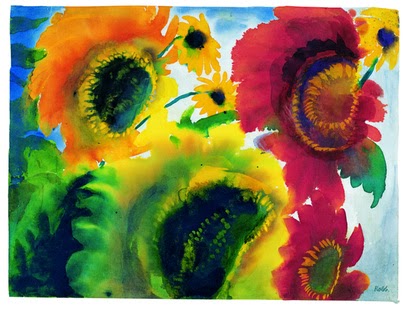
Die Pracht der Farben
Case challenge
A 29-year-old man was seen in an outpatient clinic because of abdominal pain, fever, and weight loss. He had had a respiratory illness approximately 2 years before this evaluation. Chest imaging revealed tiny nodules in both lungs. What is the diagnosis? Mehr
Abonnieren
Posts (Atom)